
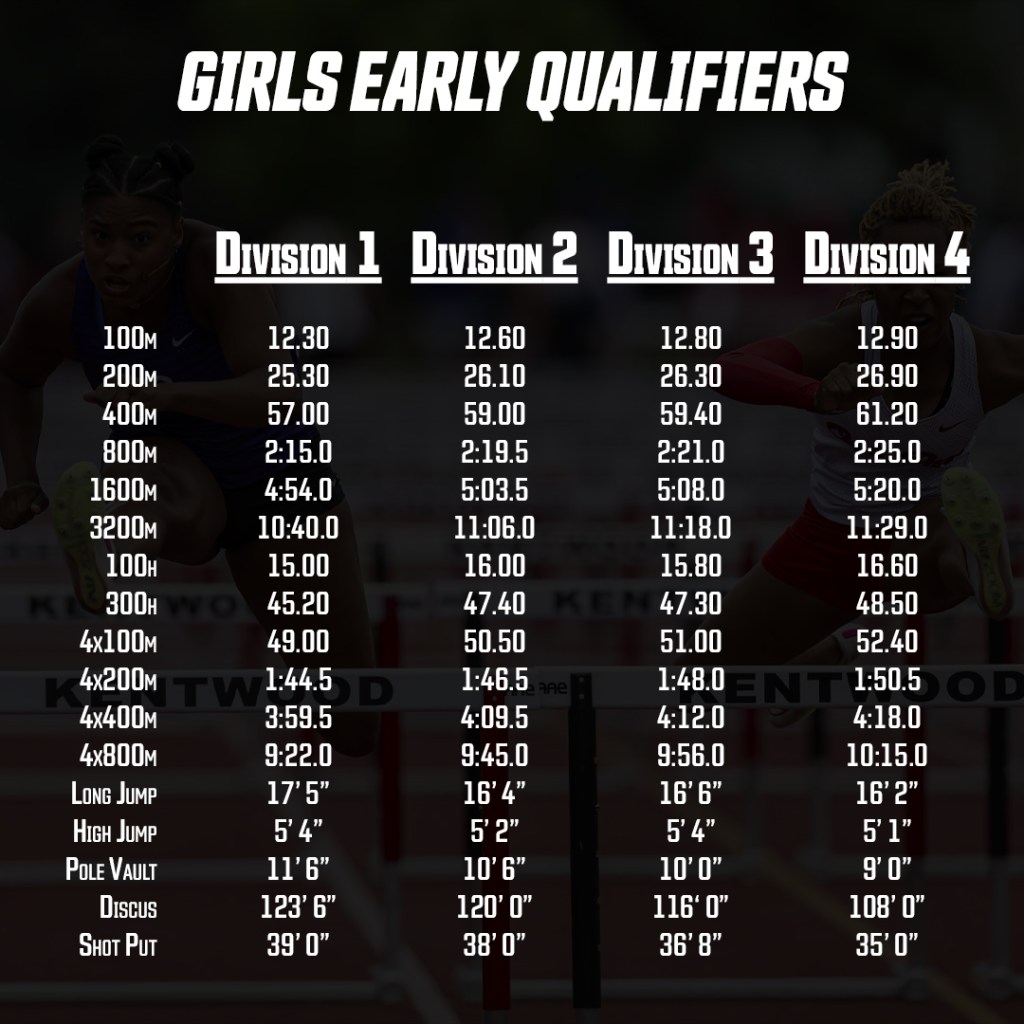
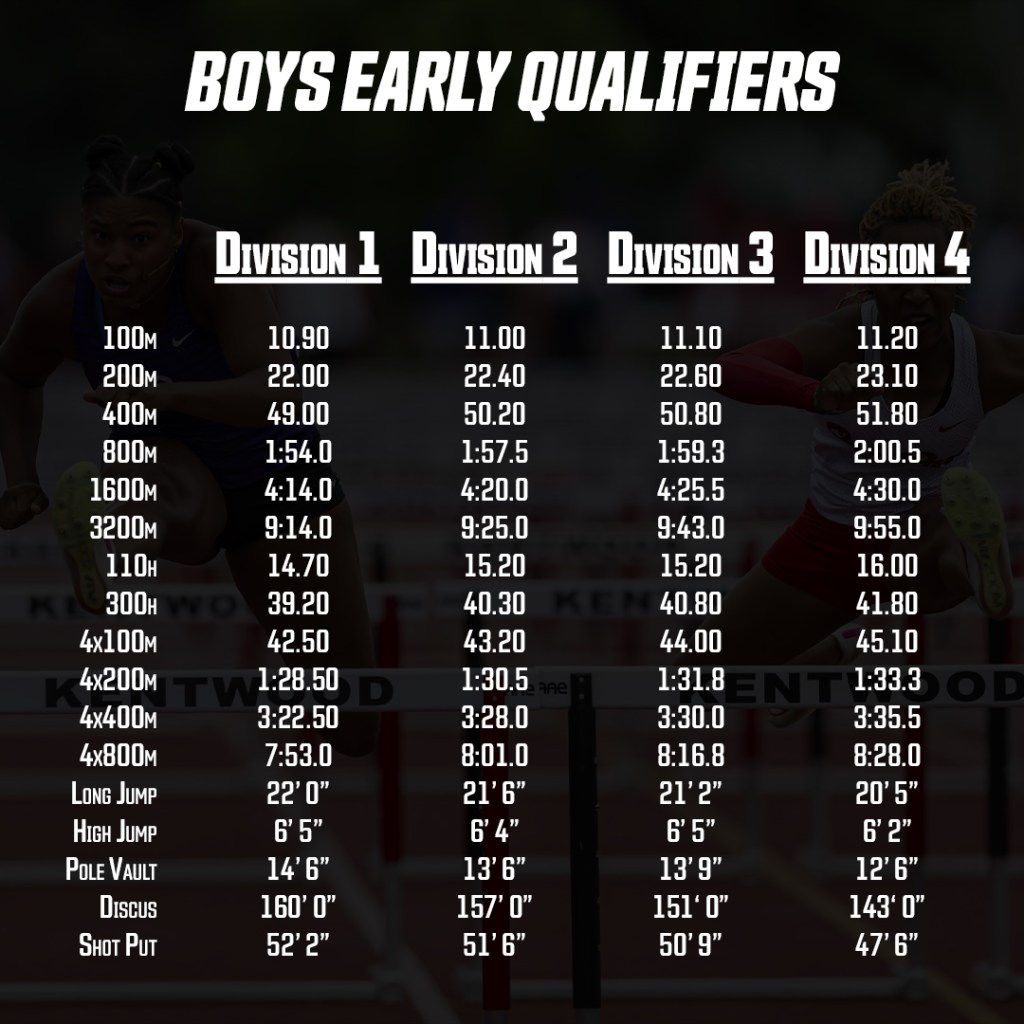
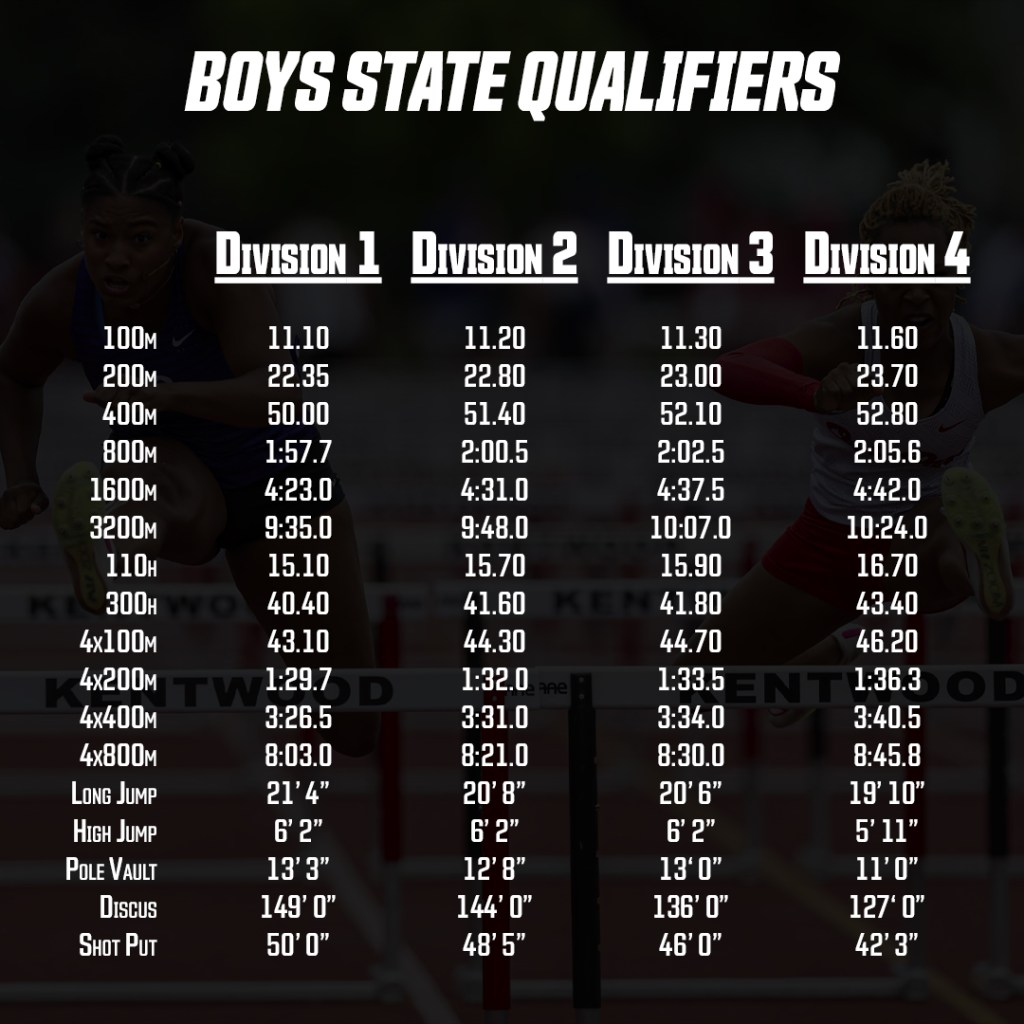

Am I the only one to have noticed these? I haven’t seen anything on the coaches’ forums, internet, social media, newsletters, or even an announcement from the MHSAA.
The Early Qualifying Standards for the 2026 T&F season have been posted. Yes, you can check with your own eyes:
https://www.mhsaa.com/sports/boys-track-field/adcoach
Scroll about halfway down the page and look within the navy-blue box. There you have the Early Qualifying, State Qualifying, and Regional Qualifying Standards.
With me being me, I’m always gonna dive a little deeper than the surface. And I usually have numbers and a database from the past season. Posting all the early qualifiers throughout last spring, I have just that, a grand listing of everyone that qualified prior to the final round at regionals (if one hit an EQ in the regional final, they would’ve already qualified via the SQ, so that’s useless data in my opinion). Shading on the charts corresponds with my subjective thoughts, red numbers represent numbers that are too low, green represents qualifying numbers that were a bit too high.
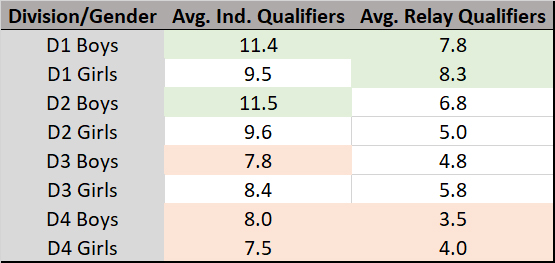
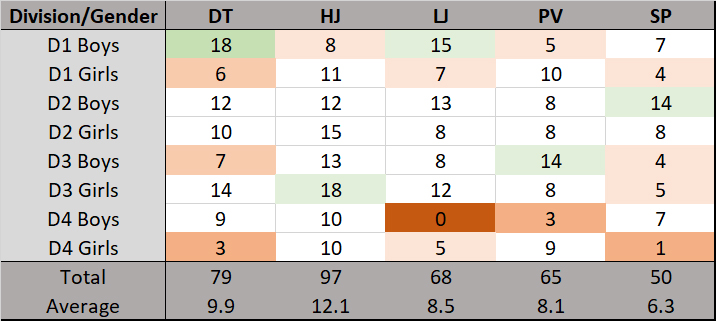
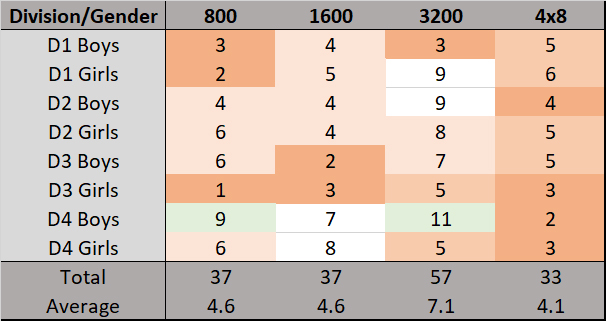
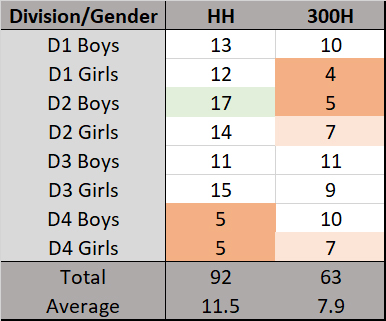
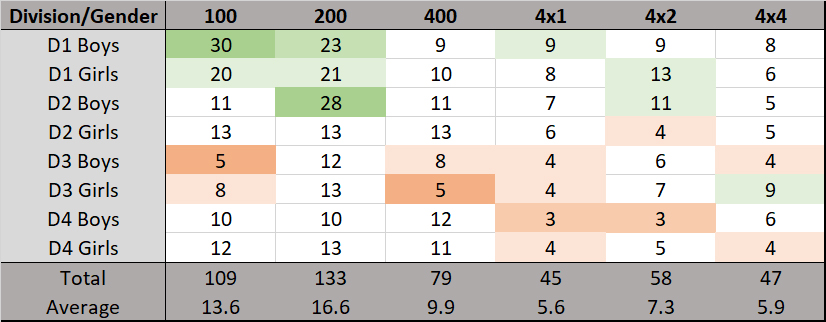
A few observations from those numbers.
- Sprints had the highest number of qualifiers.
Sprints will always have the highest number of participants. They’ll also have Michigan weather, not an advantage at all. On the other hand, a wind gauge isn’t required and illegal wind does not disqualify a qualifier.
- Distance had the least number of qualifiers.
Distance typically takes up the next highest set of participants. There are certainly more distance runners than hurdlers, throwers, jumpers, or vaulters. Different than the other events are the methods in which one trains to peak for a distance race. To be able to peak in early June, a distance runner usually won’t be in their best fitness in April. My thought is that the current EQ system puts distance runners at a disadvantage relative to the other events.
- The higher the enrollment, the higher the qualifiers
Both on a team and relay level. It’s my understanding that the 2025 EQ standards were calculated by the average 6th place at the State Finals over the past 3. In theory, that should lead to an equal number of qualifiers in that event. In reality, there are all sorts of randomness and anomalies and years where the event is stronger or weaker. For the individual events, there is a clear difference between the qualifying numbers in Divisions 1 & 2 vs. Divisions 3 & 4. I wonder if this is tied to the number of qualifying opportunities. Lower divisions tend to be from more urban areas, where there’s a higher concentration of meets, and thus, a higher concentration of qualifying chances.
These are just observations. Are there solutions where you have a different formula for distance runners or lower divisions? Reading the 2026 qualifying FAQ, my interpretation is that while the 3-year average of 6th place finishes is the baseline, some adjustments were made from that point. There is no mention of how those adjustments were thought out.
All this being said, CHANGES WERE MADE. I have charts for that as well!
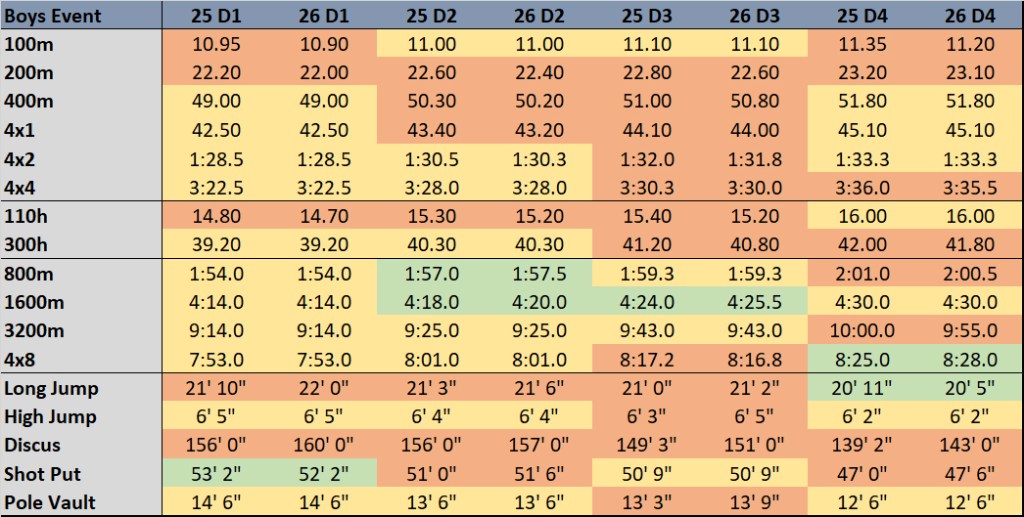

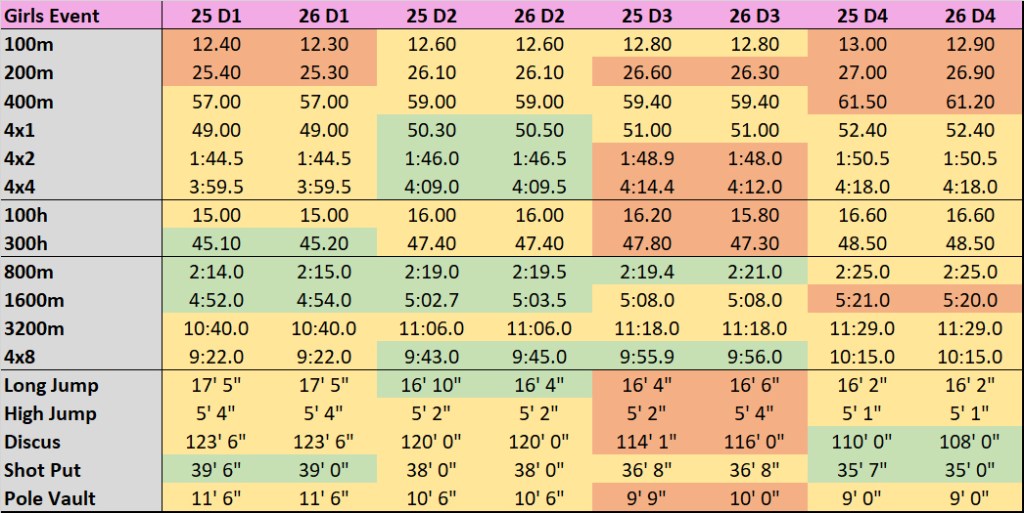

From the first set of charts, I outlined events per division and gender that had an egregiously high number of qualifiers:
Division 1 Boys 100m – lowered from 10.95 to 10.90, eliminating 7 early qualifiers
Division 1 Boys 200m – lowered from 22.20 to 22.00, eliminating 7 early qualifiers
Division 2 Boys 200m – lowered from 22.60 to 22.40, eliminating 17 early qualifiers
The Division 1 changes appear reasonable. The Division 2 Boys 200m could be a tad aggressive.
With the exception of the D4 Boys 800m and 3200m, the distance events were low on early qualifiers. Of the 32 distance EQ standards, only 4 got harder (the 2 listed in the previous sentence among those 4), 11 became easier, and the other 17 remained the same.
Divisions 3 & 4 had less qualifiers on average. But compared to the other divisions, their standards got tougher. Of the 68 EQ marks for D3/D4, 33 became tougher (49%). Of the 68 EQ marks for D1/D2, 14 became tougher (21%).
On the flip side of the low division sprints, there were a few events where very few athletes hit the EQ marks
Division 4 Boys Long Jump – lowered from 20’ 11” to 20’ 5”, would have added 3 qualifiers
Division 4 Girls Shot Put – lowered from 35’ 7” to 35’ 0”, would’ve added 3 qualifiers
Division 3 Girls 800m – raised from 2:19.4 to 2:21.0, would’ve added 0 qualifiers
Division 4 Boys Pole Vault – remained the same at 12’ 6”
Division 4 Girls Discus – lowered from 110’ 0” to 108’ 0”, would’ve added 0 qualifiers
Division 3 Boys 100m – remained the same at 11.10
Division 3 Girls 400m – remained the same at 59.40
The first two listed had the absolute lowest figures and meaningful changes were had. The remaining five either have no changes or the changes wouldn’t have an impact on last year’s figures. But a caveat must be made, top-8 athletes from each event, over 90% competed in the State Finals anyhow. The end results were State Finals fields that represented the best of that division, which is intention of any qualifying system.
Matt, you’ve rambled quite a bit. What do you actually think?
The adjusted requirements and changes in the EQ marks follow a logical pattern. I’d love if the MHSAA, in the early qualifying FAQ document, summarized what they felt about last year’s system. From the numbers, it appears as if the inconsistencies in qualifiers were addressed, but I’m curious if the MHSAA believes it was a fair system that ensured the best athletes and relays were able to compete at State. As you’re probably aware, I have no qualms about calling out unfair XC regionals, I definitely don’t toe any company lines, and have no issue calling out issues. That said, I’ll give the MHSAA an A- on these EQ marks and regulations.

 Michigan XC Speed Ratings