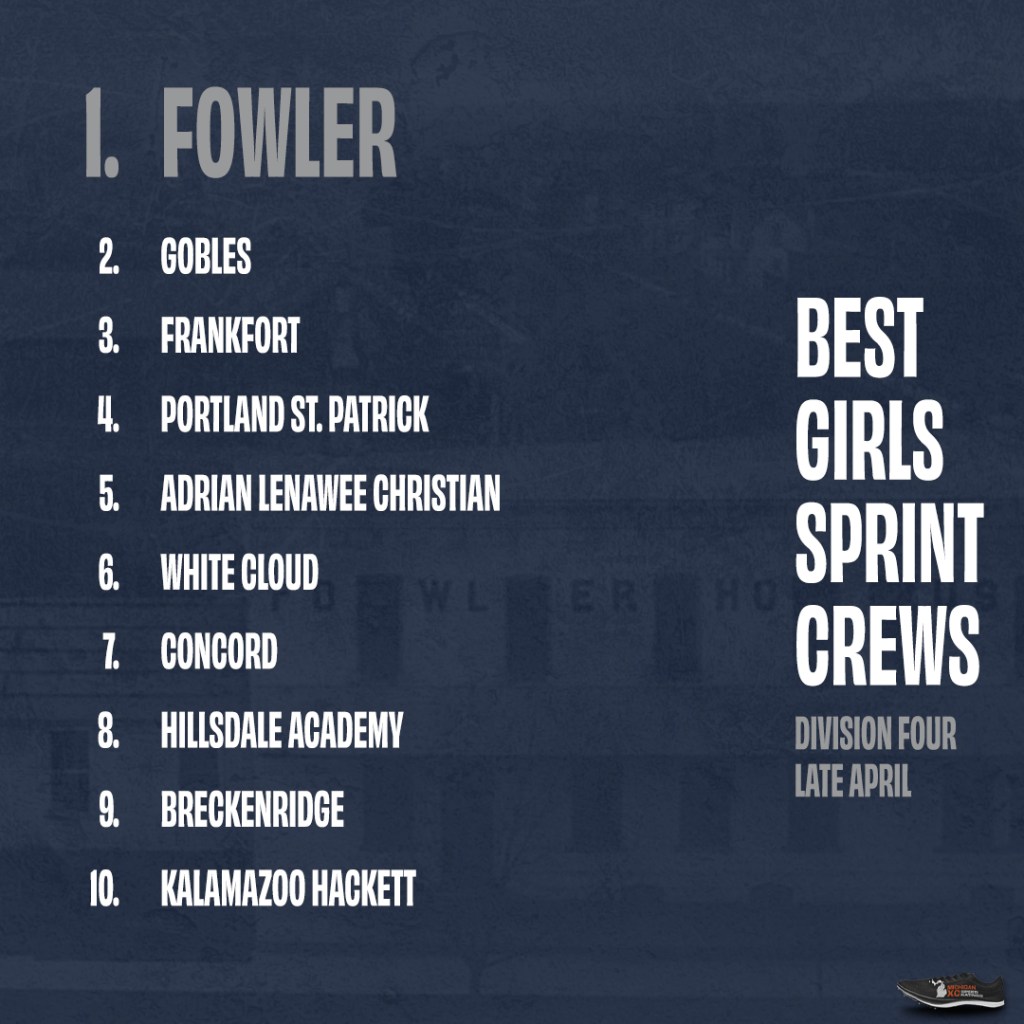
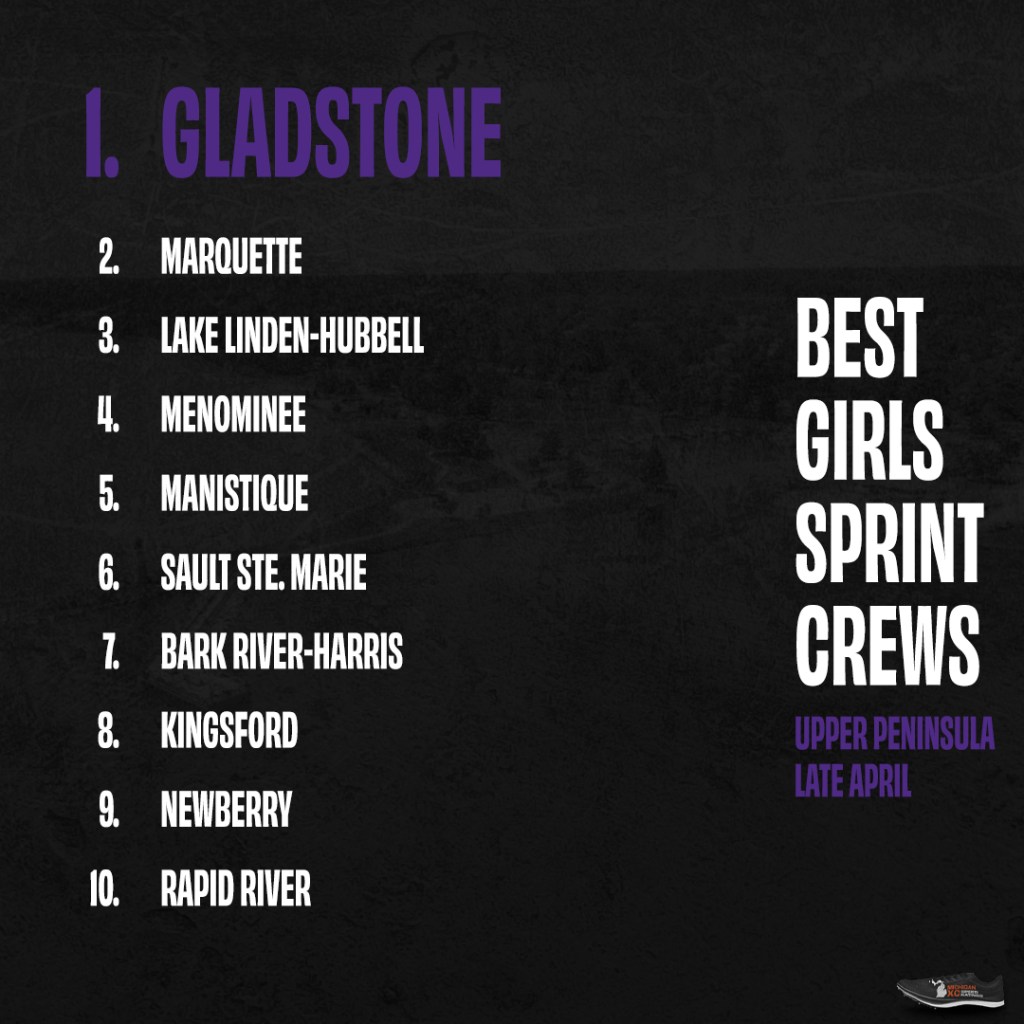
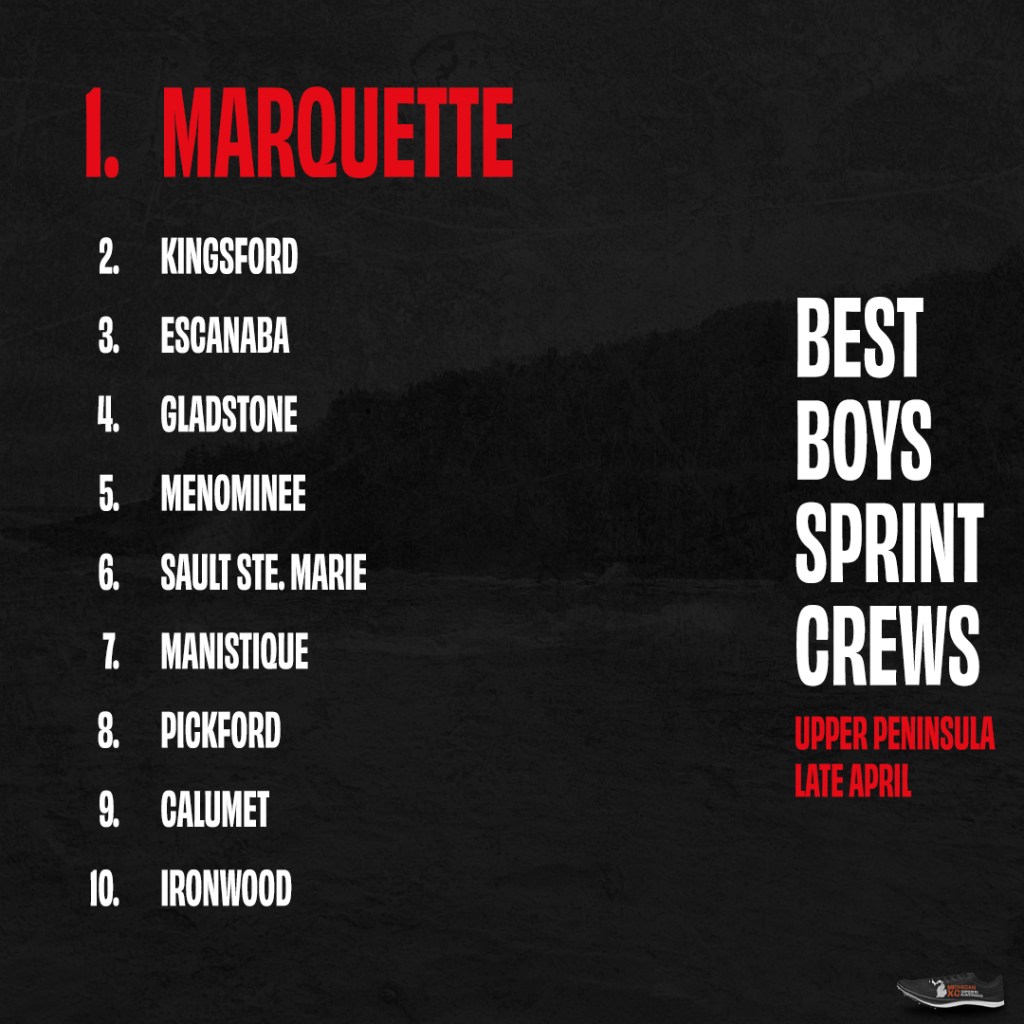
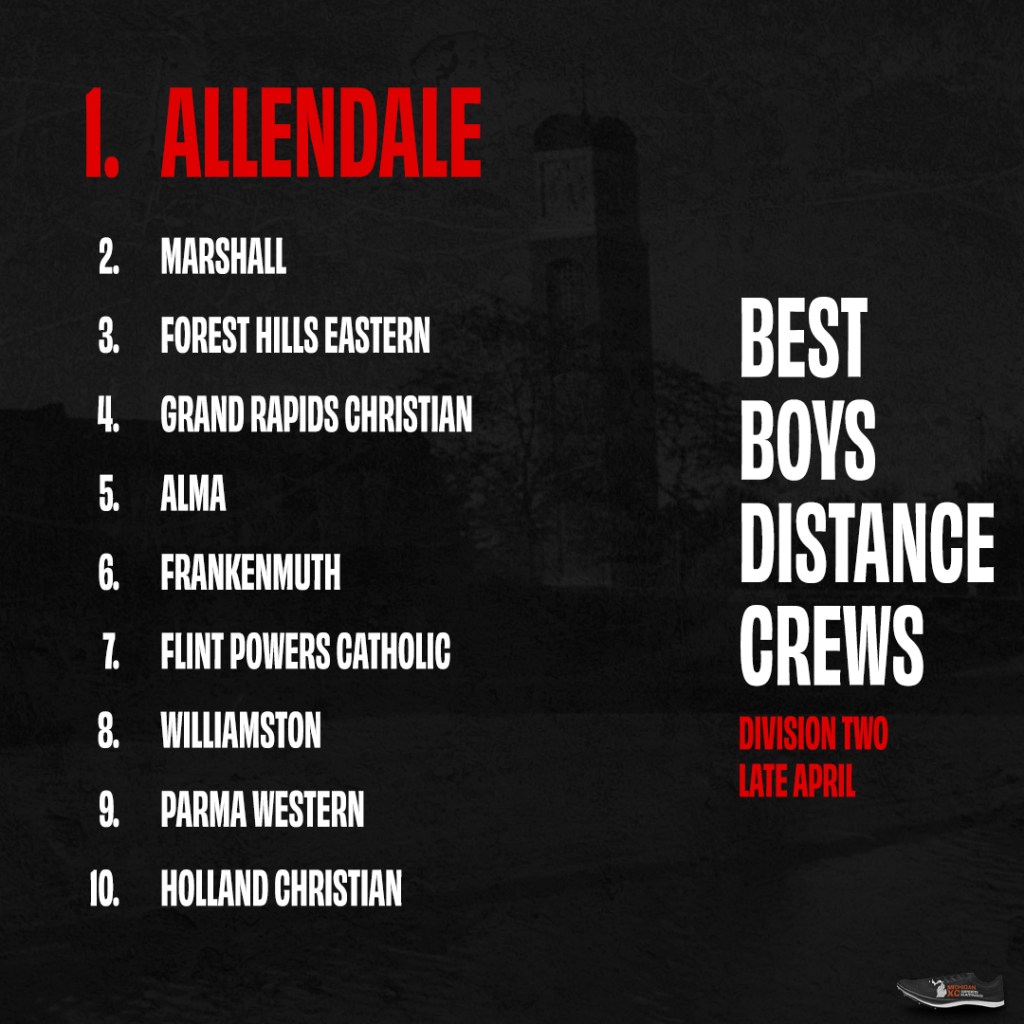
The Best Crews have been a thing around here for the past few years. They take their cues from USTFCCCA’s event squads and the World Athletics scoring system, combining the two ideas in order to compare Michigan’s teams against events in their common areas.
The goal of this is to help recognize the athletes and coaches that create cultures, history, and traditions in their respective event areas. Think about it like this: Minnesota always has great hockey, basketball hoops are nailed to Indiana barns, Texas churns out football talent, every Iowa boy has cauliflower ear. Where in Michigan does hurdling reign supreme? Is there a town where kids learn to shot put before they can tie their shoes?
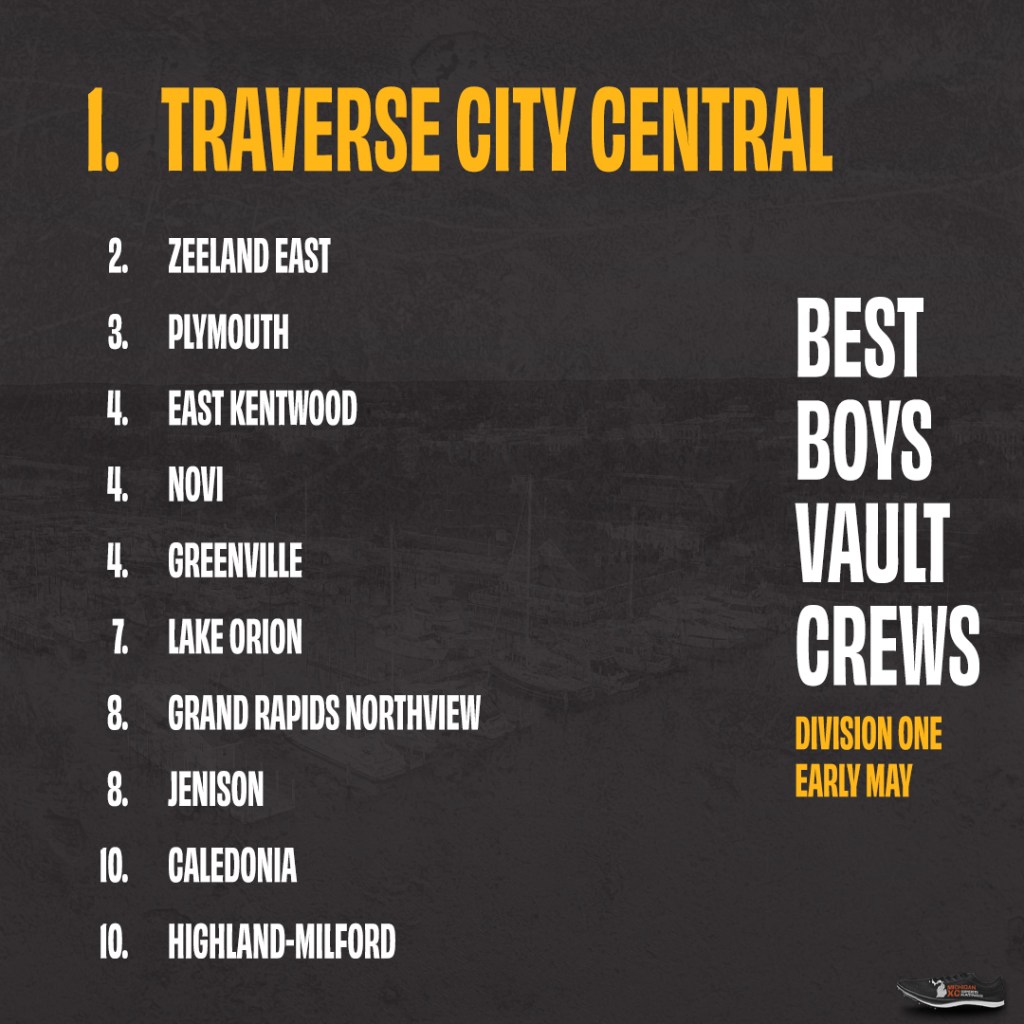
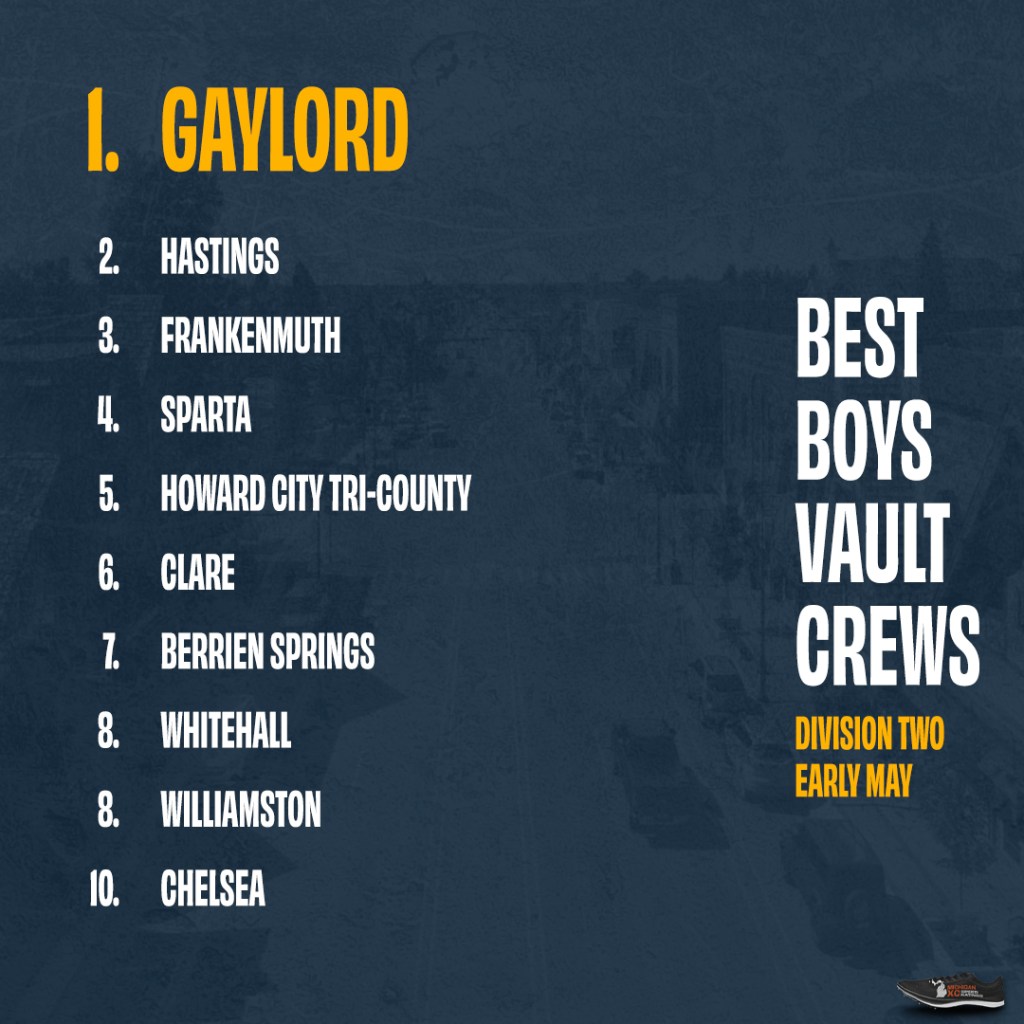
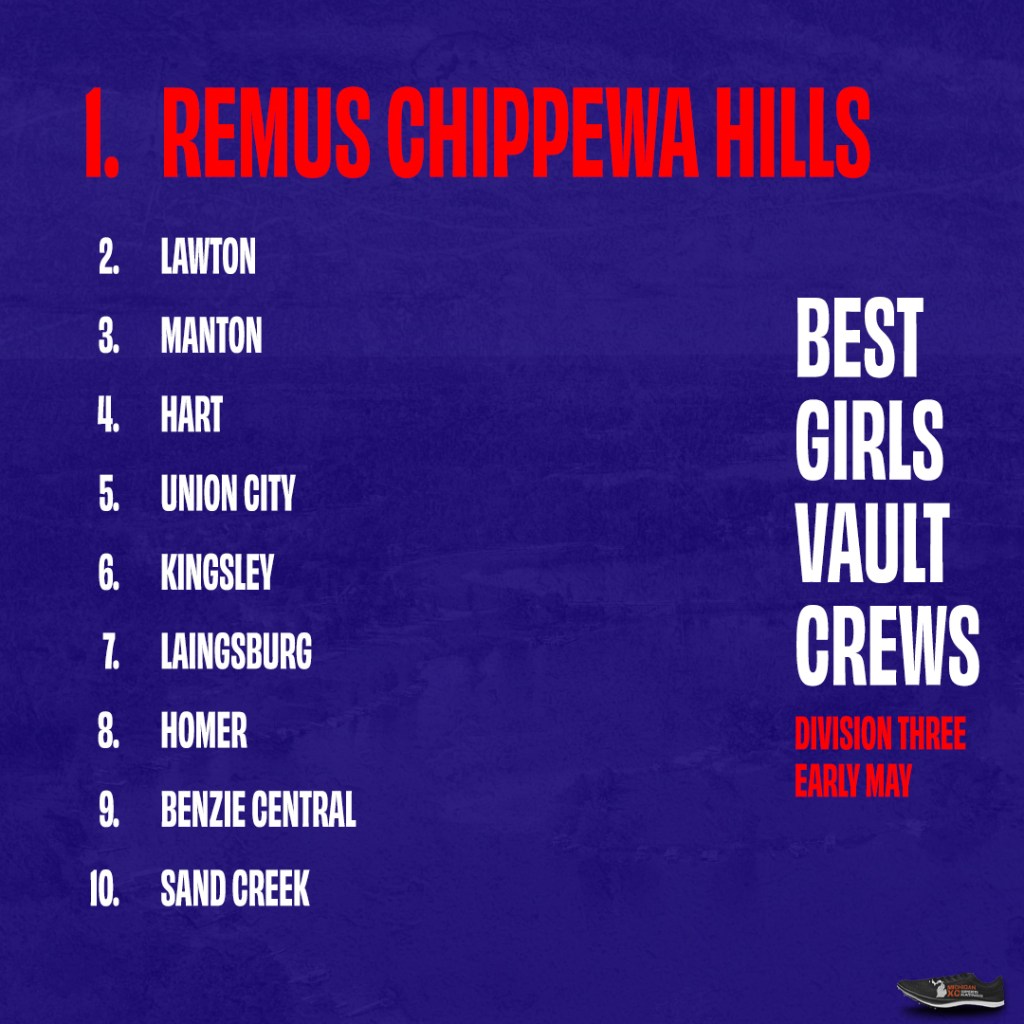
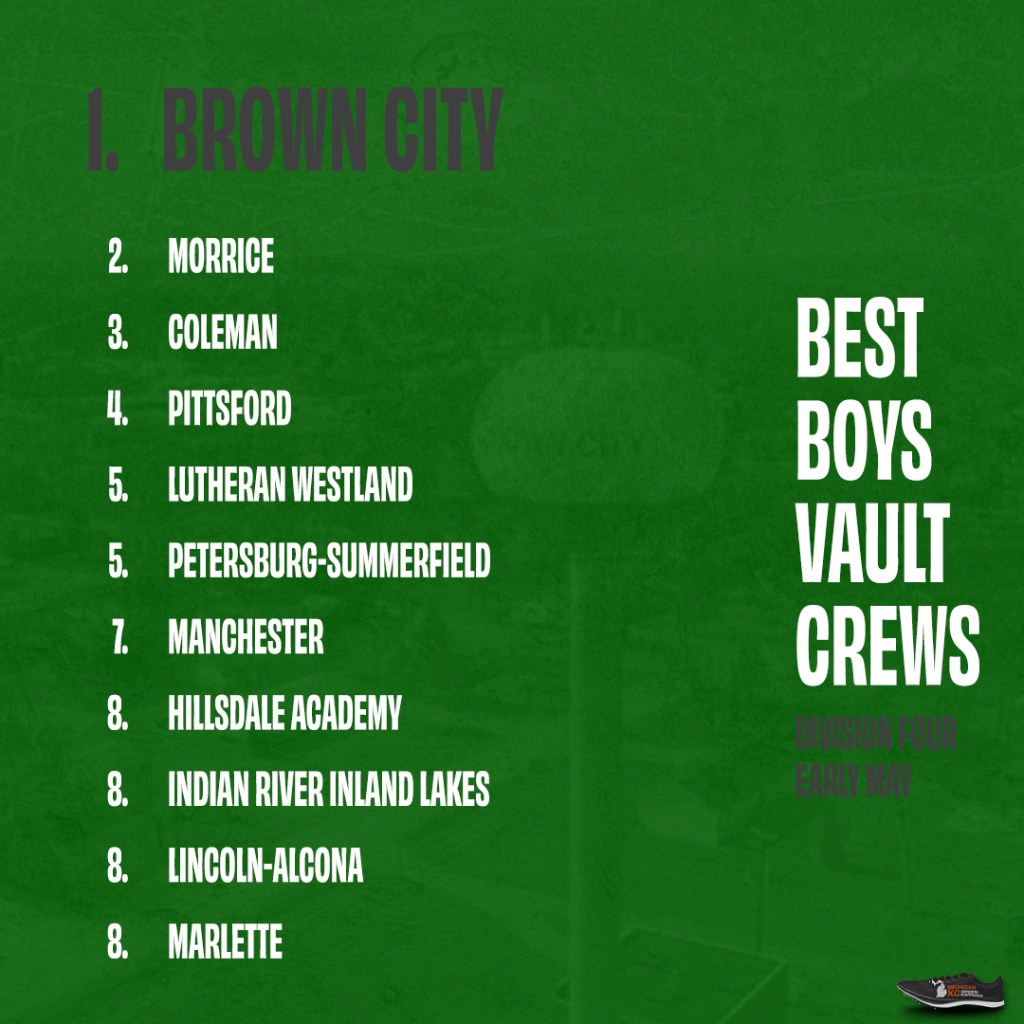
Early in the season, I had some optimism that I’d have time to do some writing. A month later, it’s very evident that I was pessimistic regarding how many EQ’s we’d have. So you just get charts and rankings.
These contain results uploaded to athletic.net by Sunday morning.
The Best Crews have been a thing around here for the past few years. They take their cues from USTFCCCA’s event squads and the World Athletics scoring system, combining the two ideas in order to compare Michigan’s teams against events in their common areas.
The goal of this is to help recognize the athletes and coaches that create cultures, history, and traditions in their respective event areas. Think about it like this: Minnesota always has great hockey, basketball hoops are nailed to Indiana barns, Texas churns out football talent, every Iowa boy has cauliflower ear. Where in Michigan does hurdling reign supreme? Is there a town where kids learn to shot put before they can tie their shoes?
an athlete qualifies by hitting a regional qualifying mark in an event
those times from the athletes are converted into points
at a maximum of three athletes (with an exception for teams that have more athletes under the state qualifying mark), team scores are tallied up
then team scores are added across all events of a certain area (hurdles, distance, etc.)
As there are no regional qualifiers for relays (every team gets an entry), I had to make an estimation of what a regional qualifying mark might be. These are done on a ratio of the SQ/EQ marks for each individual and relay of that distance. On average, the relay qualifying time is around 4.1x the individual qualifying time (for example, the girls D1 200m EQ is 25.4, the 4×2 is 1:44.5). Anyhow, this is what I came up with for the relay times needed to obtain points here:
Estimated RQ
D1 Girls
D2 Girls
D3 Girls
D4 Girls
4x100m
52.25
54.05
55.25
56.75
4x200m
1:52.0
1:54.1
1:58.0
2:00.7
4x400m
4:21.3
4:32.1
4:42.3
4:50.7
4x800m
10:14.7
10:50.5
11:25.0
11:44.0
Estimated RQ
D1 Boys
D2 Boys
D3 Boys
D4 Boys
4x100m
44.75
45.8
46.9
48.25
4x200m
1:34.0
1:36.0
1:37.3
1:40.9
4x400m
3:35.4
3:41.8
3:43.9
3:55.0
4x800m
8:28.0
8:38.0
9:01.1
9:26.3
Here are the figures that show the points for each mark:
Early in the season, I had some optimism that I’d have time to do some writing. Two weeks later, it’s very evident that I was pessimistic regarding how many EQ’s we’d have. So you just get charts and rankings.
These contain results uploaded to athletic.net by Tuesday (4/29) evening.
The Best Crews have been a thing around here for the past few years. They take their cues from USTFCCCA’s event squads and the World Athletics scoring system, combining the two ideas in order to compare Michigan’s teams against events in their common areas.
The goal of this is to help recognize the athletes and coaches that create cultures, history, and traditions in their respective event areas. Think about it like this: Minnesota always has great hockey, basketball hoops are nailed to Indiana barns, Texas churns out football talent, every Iowa boy has cauliflower ear. Where in Michigan does hurdling reign supreme? Is there a town where kids learn to shot put before they can tie their shoes?
an athlete qualifies by hitting a regional qualifying mark in an event
those times from the athletes are converted into points
at a maximum of three athletes (with an exception for teams that have more athletes under the state qualifying mark), team scores are tallied up
then team scores are added across all events of a certain area (hurdles, distance, etc.)
As there are no regional qualifiers for relays (every team gets an entry), I had to make an estimation of what a regional qualifying mark might be. These are done on a ratio of the SQ/EQ marks for each individual and relay of that distance. On average, the relay qualifying time is around 4.1x the individual qualifying time (for example, the girls D1 200m EQ is 25.4, the 4×2 is 1:44.5). Anyhow, this is what I came up with for the relay times needed to obtain points here:
Estimated RQ
D1 Girls
D2 Girls
D3 Girls
D4 Girls
4x100m
52.25
54.05
55.25
56.75
4x200m
1:52.0
1:54.1
1:58.0
2:00.7
4x400m
4:21.3
4:32.1
4:42.3
4:50.7
4x800m
10:14.7
10:50.5
11:25.0
11:44.0
Estimated RQ
D1 Boys
D2 Boys
D3 Boys
D4 Boys
4x100m
44.75
45.8
46.9
48.25
4x200m
1:34.0
1:36.0
1:37.3
1:40.9
4x400m
3:35.4
3:41.8
3:43.9
3:55.0
4x800m
8:28.0
8:38.0
9:01.1
9:26.3
Here are the figures that show the points for each mark:
Early in the season, I had some optimism that I’d have time to do some writing. Two weeks later, it’s very evident that I was pessimistic regarding how many EQ’s we’d have. So you just get charts and rankings.
These contain results uploaded to athletic.net by Sunday (4/2) evening.


















 Michigan XC Speed Ratings